
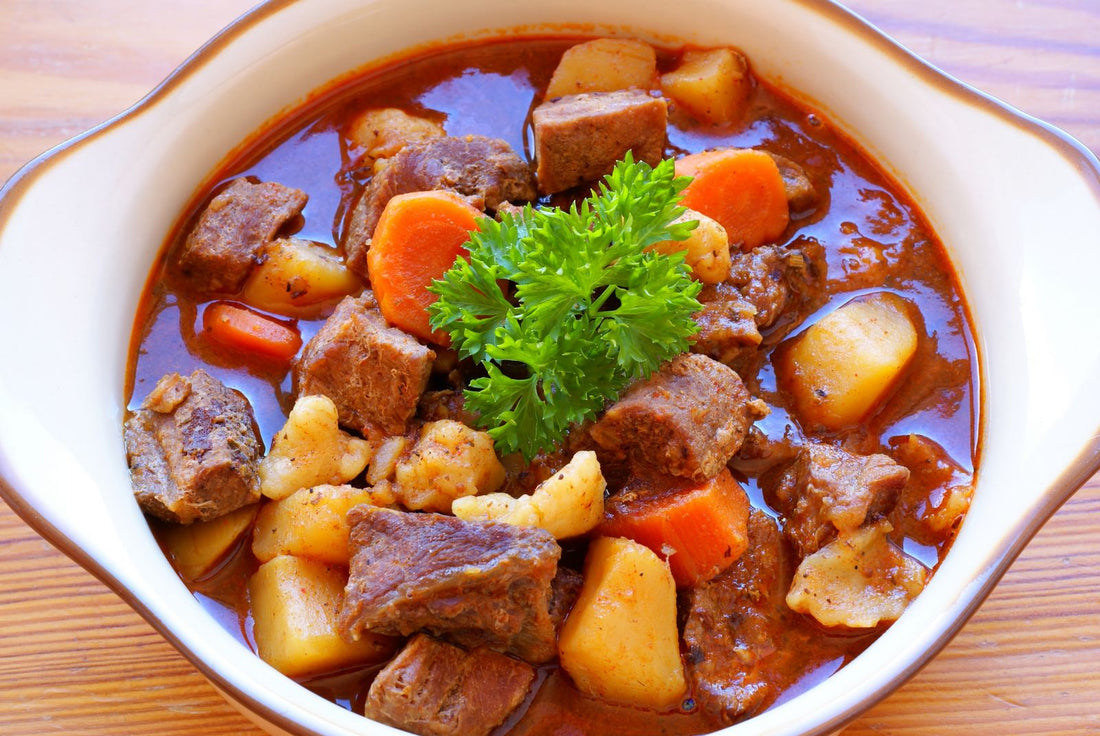
“Alföldi” Goulash Soup - Alföldi Gulyásleves
Serves 6 · Prep 45 min · Cook 1.5–3 hours · One-pot Hungarian classic
Goulash is the most famous Hungarian dish — a rich one-pot soup usually made with beef (often substituted with pork), deep red from real Hungarian paprika. It can be cooked over an open fire in a traditional kettle called a bogrács, which makes it a brilliant addition to a barbecue. Vegan and vegetarian variations are at the bottom of the recipe.

Ingredients
- 100 g (3.5 oz) lard, vegetable oil or olive oil
- 250 g (8.8 oz) yellow onions, finely diced
- 20 g (0.7 oz) sweet Hungarian paprika powder — or a sweet & hot mix to taste
- 800 g (28.2 oz) diced beef or pork
- 30 g (1.1 oz) salt
- Black pepper to taste (about ¼ teaspoon)
- 1 teaspoon whole caraway seeds
- 50 g (1.8 oz) garlic, minced
- 200 g (7.1 oz) carrot, sliced
- 100 g (3.5 oz) parsnip, sliced
- 600 g (21.2 oz) potatoes, cut into large cubes (2–2.5 cm)
- 100 g (3.5 oz) green pepper, cored and diced
- 100 g (3.5 oz) tomatoes, diced
“Csipetke” – pinched pasta (optional):
- 1 whole egg
- 120–150 g (4.5 oz) plain flour — the dough should be thick and gluey
- 1–2 pinches of salt
Gluten-free? Skip the csipetke — the soup is complete without it — or stir in cooked gluten-free pasta at the end.
Short on time? Our Hungarian goulash paste combines the paprika, onion and spice base in one jar — brown the meat, stir it in, add water and vegetables.
Method
- Add the lard or oil to the pot and heat it up.
- Add the finely diced onions and sauté on medium-high heat until golden brown.
- Set the heat to low and let the pot cool a little, then add the Hungarian paprika powder and mix well. Cook for 1 minute on low heat — scorched paprika turns bitter.
- Add the diced meat, set medium heat and add a quarter cup of water. Cook covered until the meat changes colour, adding more water if needed and stirring every couple of minutes (15–20 minutes).
- Add the caraway seeds and garlic, remove the lid, turn the heat up to medium-high and cook until the water evaporates, stirring continuously.
- When the water has evaporated and the meat starts to fry in the fat, add the sliced carrots and parsnip and fry for a couple of minutes.
- Add the diced green pepper and tomatoes, then pour in water until it covers everything, plus a little more — the potatoes will go in later.
- Add the salt and black pepper to taste.
- Cook until the meat is nearly tender (about 20 minutes before done), then add the potatoes and cook until they are soft. Top up with water if needed.
- Meanwhile make the pinched pasta: beat 1 egg in a bowl, add 120 g (4.5 oz) plain flour and a couple of pinches of salt, and mix. If it is too soft, add flour; for more pasta, add another egg and flour — no water. The dough should be thick and gluey:

- When the potatoes are cooked and the soup is boiling, pinch kidney-bean-sized pieces of dough into the soup with a small oiled spoon. Cook for a minute or two — they float to the top when done. Keep the soup loose; it should not be thick. (You can also cook the csipetke separately in salted boiling water and stir them in.)
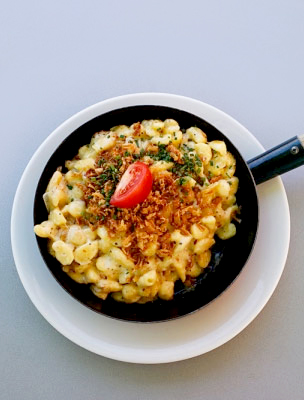
I hope you enjoy the cooking and the food. Preparation takes about 45 minutes, plus 1–3 hours of cooking depending on how tender the meat is.
Vegan & vegetarian version
Substitute the meat with textured soy protein cubes or seitan; cook for at least 45 minutes to develop the flavours. The pinched pasta can be made without eggs: use the strongest white wheat flour you can find (13 g protein per 100 g or more), cook the dumplings separately in salted water — make nearly double the amount, as some will disintegrate — then strain, rinse under the tap and stir into the soup. It also works fine with no pasta at all.